A stitch across the threshold
The Ward-Lace Heron is tall and exceptionally thin, with delicate legs and a body of fine, partially transparent strands. It moves slowly through doorways, alley mouths, drainage openings, access hatches, and other places where a journey becomes a choice. Thread-like lace trails behind it.
Sightings span Tiers 0–4, most densely around the managed corridors and gates of Tiers 1–3. The Heron does not chase or remain to guard what it marks. It walks a line and leaves. Minutes later, a door may resist opening, a passage feel narrower, or people hesitate without knowing why.
Testing an open way
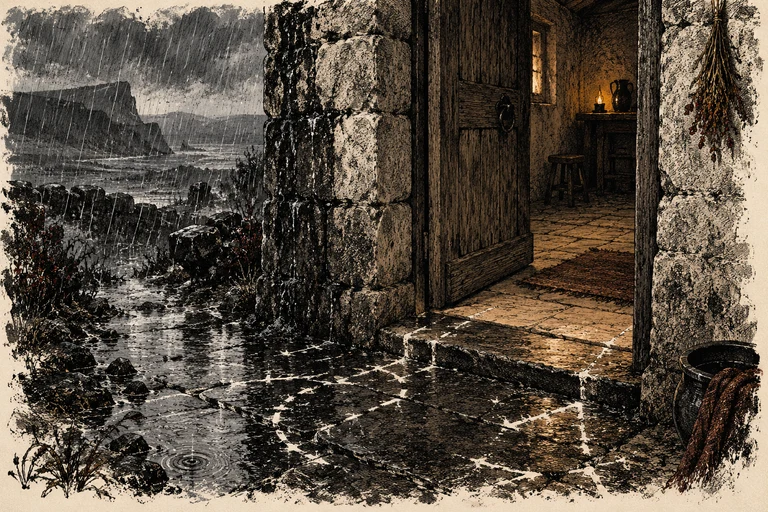
Sometimes the lace appears as thin wet lines or faint imprints. Elsewhere the first sign is the crowd: one apparently unobstructed entrance falls out of use while another becomes congested. The restriction can persist after the bird has gone.
Residents watch for water arranged in unusually regular patterns. Chalk, ash, or loose debris that catches on nothing can expose a changed threshold. A careful touch to a frame or test before committing is safer than assuming a visible opening remains usable.
Rumors say crossing the lace makes someone guilty or that the Heron closes doors permanently. What witnesses can establish is a lasting change in passage and behavior, not a universal rule about blame or duration.