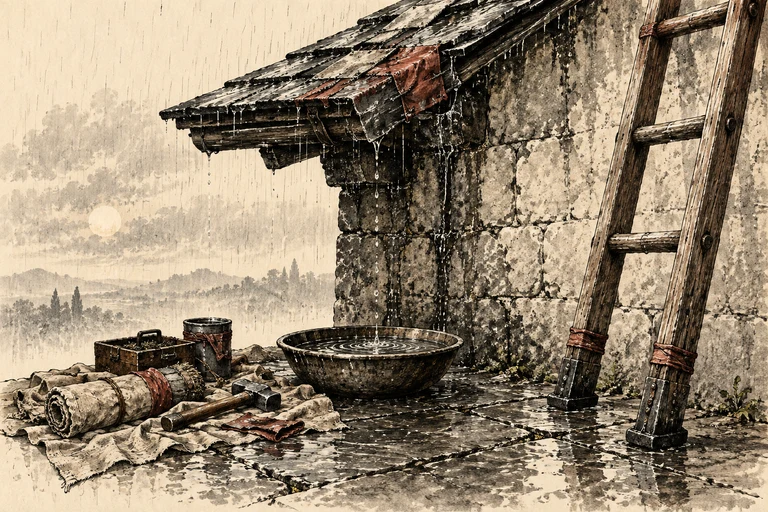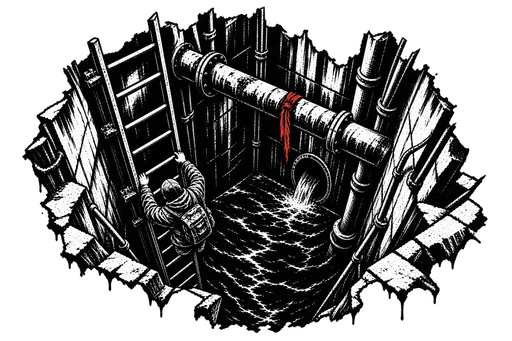
Two doors, days apart
Two doors can share a wall and remain socially days apart. One asks for a token; the other needs low water, a working cage, and a keeper willing to recognize a face. Maps describe the structure but cannot show a private grudge, a missing operator, a frightened animal, or a delivery that blocked the landing.
Public stairs, ramps, bridgeways, lifts, and inspection lanes are regulated rather than universally accessible. A route can be officially open while a chair cannot turn, a tail has no room in the crush, papers soak before inspection, or a parent cannot afford the hours a queue requires.
The people beneath a journey
Drain clearers pull cloth, wire, fungal mats, and carcasses out of grates before a market can open. Bridge hands test bolts and rails. Lift crews maintain brakes and evacuation ladders. Carriers move food, medicine, heat cells, messages, and people whose privacy matters.
Passage brokers coordinate recognition across routes they do not wholly own. Somebody else repairs the hinge, knows the water, and decides not to sell the way. Route listeners may be elders, children, couriers, or workers attentive to vibration, pipes, echoes, and animal behavior. Their skill belongs to a place rather than a mystical ancestry.
What a traveler learns
Good directions include where to rest, which rail carries a dangerous current, whether the return descent will defeat an injured knee, and which dry wall can be yielded to medicine or a sleeping child. Large loads are announced at blind turns. A free hand can test a wall, catch a child, hold a rail, or show that no weapon is being drawn.
Horn-clearance marks, grip strips, tail space, sound cues, wider turning shelves, and breathing pauses make passage possible for different bodies. These are ordinary infrastructure, not favors.
When a familiar turn returns
A collapsed landing needs repair; a closed gate may need permission. A corridor that keeps bringing a walker back to the same bolt or stencil is a different problem. Workers notice because they knew the way before it changed. A Lensface Crow needs attention and a route capable of repeating; not every wrong turn is its work.
A notebook can keep the earlier observation beside the contradiction. The rope still has to hold the traveler’s body, and a refuge still has to fit it. Turning back can preserve a life without explaining the change. A missed delivery, an empty window or a damaged wrap remains someone’s problem after the route reopens.
When the way closes
A toll may support a rope, pay a lookout, or compensate the household whose room holds the hatch. It becomes predatory when someone manufactures danger, claims work they never did, or demands payment the traveler has no right to give.
Flood, collapse, policing, animals, community refusal, or the loss of a keeper can kill a route. The closure separates school, medicine, work, courtship, and burial. A reopening does not repay lost wages or restore spoiled treatment. Residents remember old ways in phrases, detour customs, and portions still set aside for customers who no longer pass.